Concept Maps, Generated: Using AI to Connect Ideas
A concept map is a diagram of how ideas relate — nodes for concepts, labeled links for the relationships between them. Students use them to study; researchers use them to think. The bottleneck has always been that building one by hand is slow. Using AI to generate and extend a concept map removes that bottleneck, letting you see the connections in a topic about as fast as you can ask about them.
Concept maps vs mind maps
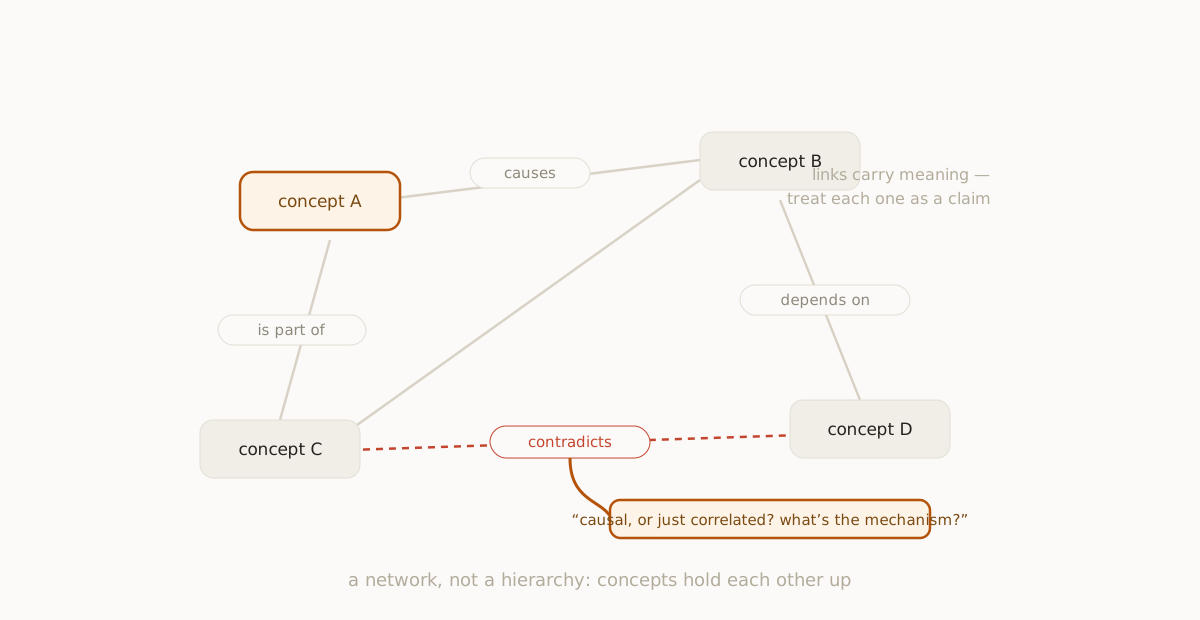
The two get conflated, so it's worth being precise. A mind map is a hierarchy: one central idea, branches radiating out, sub-branches off those. A concept map is a network: concepts can connect to multiple other concepts, and the links themselves carry meaning ("causes," "is part of," "contradicts"). Mind maps are great for exploring a topic outward from a center. Concept maps are great for understanding how the parts of a system relate to each other.
For a lot of research, you want both — and the line between them blurs the moment your branches start referencing each other.
Why building them by hand is the bottleneck
The value of a concept map is the relationships, and relationships are exactly what's expensive to produce. To draw an accurate one you already have to understand the topic — which is backwards, because you're usually making the map in order to understand it. So people either skip concept maps entirely or make shallow ones that just restate what they already knew.
This is the gap AI closes. A model already "knows" how the concepts in a topic relate. Asked well, it can surface the relationships you'd have spent hours discovering — and you can interrogate each one instead of taking it on faith.
Generating a map by asking
The workflow is conversational. Start with the topic and ask for its main concepts. For each concept that matters, ask how it relates to the others — what causes what, what depends on what, where the tensions are. Each answer becomes a node, and because you asked about a specific relationship, the node attaches to the concepts it connects. The map assembles itself from your questions.
This is the LLM-as-engine, map-as-structure pattern again: the model supplies the relationships; the workspace holds them in a shape you can see and navigate. You're not drawing a diagram from knowledge you already have — you're growing one from questions, which is the only honest way to map something you're still learning.
Interrogate the links
The hazard with AI-generated structure is that a confident model will assert relationships that are oversimplified or wrong. So treat every link as a claim, not a fact. When the map says A causes B, branch a node that asks "is that actually causal, or just correlated? what's the mechanism?" The relationships that survive interrogation are the ones worth keeping. This habit — using structure to make claims checkable — is the same discipline that keeps an AI literature review honest.
From map to understanding
A finished concept map does something a summary can't: it makes the structure of a topic visible. You can see which concepts are central (lots of links) and which are peripheral, where the causal chains run, where the open disputes sit. That structural view is often the actual goal of research — not a pile of facts, but a sense of how the facts hang together.
And because the map records the specific relationships you chose to explore, it's yours in a way a generic explanation never is. That provenance is what makes it stick, and what makes it worth saving as part of a larger knowledge map you build over time.
Start with one relationship
You don't need to map an entire field to feel the difference. Pick two concepts you suspect are connected and ask the AI exactly how. Branch from the answer. In a few minutes you'll have a small network that shows you something a linear explanation would have hidden: not just what the concepts are, but how they hold each other up.
fork ai turns any question into a branching map you can explore, highlight, and keep. Try it free.
Start researching →