The AI Research Assistant That Doesn't Lose the Thread
"AI research assistant" usually means one of two things: a chatbot you ask questions, or an agent that goes off and writes a report. Both are useful and both share a flaw — they hand you an output and forget the path. The assistant that actually helps with sustained research is the one that keeps the whole map of your inquiry, so you never have to reconstruct where you were.
The problem with assistants that forget
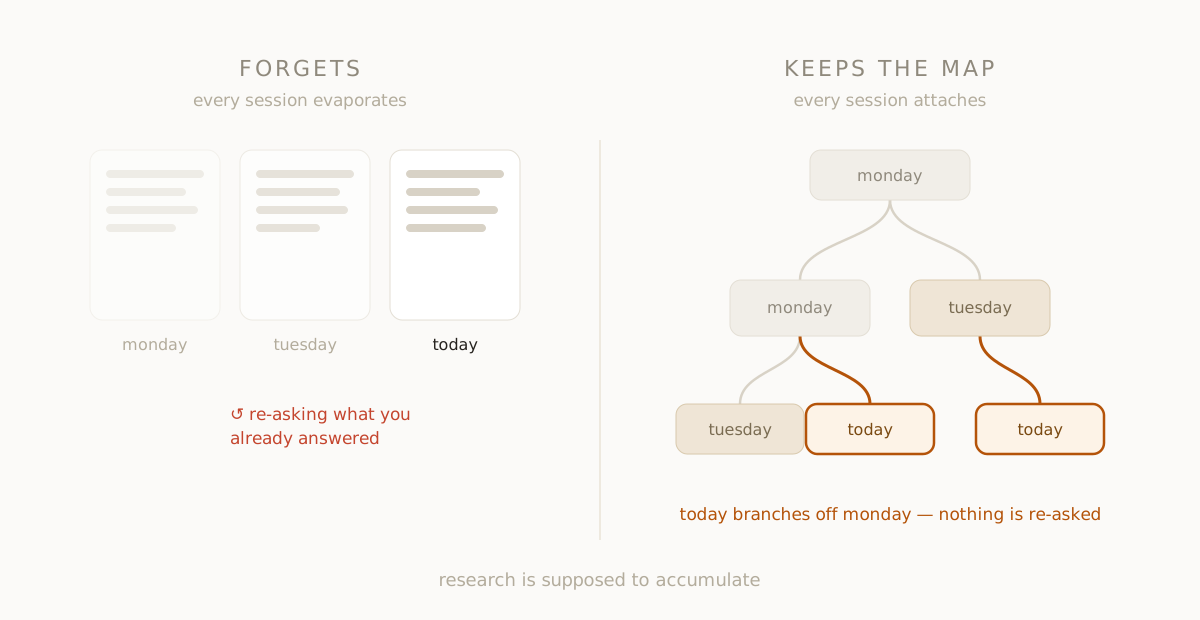
Ask a typical AI assistant a deep question and you get a good answer. Ask a follow-up and you get another. Twenty minutes later you've covered real ground — and it's all trapped in a transcript you'll never scroll back through. The assistant remembers the conversation but not the structure of your thinking. So the next day you start over, re-asking questions you already answered, because there's no map to return to.
This is the difference between an assistant that helps you in the moment and one that compounds. Research is supposed to accumulate. If every session evaporates, you're renting understanding, not building it.
What "keeping the thread" looks like
A research assistant that holds the thread does three things the chat box doesn't:
- It preserves branches. When one answer raises three questions, each becomes its own node you can return to — not three messages buried in scroll. You can explore one fully and come back to the others later, exactly where you left them.
- It remembers provenance. Every node knows which section, sentence, or question it came from. The structure isn't decoration; it's the record of your reasoning, and it's what makes the research navigable weeks later.
- It lets you work in place. Highlight a passage, ask about that, and the answer attaches to the spot — so context never gets lost in translation.
Put together, these turn a stream of answers into a knowledge map you can actually use.
Direction beats automation
There's a temptation to want the assistant to do everything — pose the questions, chase the threads, deliver the conclusion. For some tasks that's fine. But for research you care about, automation removes the very thing that makes research valuable: your judgment about what's worth pursuing. The best assistant doesn't replace your direction; it amplifies it. It makes following a thread cheap, so you can follow more of them, while you stay in charge of which threads matter.
This is why the most effective setups feel less like delegating to an agent and more like thinking out loud with a fast, structured partner — the branching-conversation model rather than the fire-and-forget-report model.
The model underneath
A research assistant is only as good as the model generating its answers, and different questions want different models. A careful conceptual question deserves a strong reasoning model; routine expansion of a sub-topic can run on something fast and cheap. An assistant worth using lets you choose per question rather than locking you to one engine. The intelligence comes from the LLM; the assistance comes from how the workspace lets you steer it.
From assistant to second brain
The longer you use an assistant that keeps the thread, the more it stops being a tool you visit and starts being a place your knowledge lives. Each session adds nodes; the map grows; old research is one click from new research. That's the line where an assistant becomes a second brain — not because it's smarter, but because it remembers structure you'd otherwise lose.
If you've bounced between AI tools wondering why none of them feel like they're helping you build anything, this is usually why. The answers were good. The assistant just kept forgetting the map. Give it one — built around the research workflow of ask, branch, and keep — and the same model starts feeling like a genuine collaborator.
fork ai turns any question into a branching map you can explore, highlight, and keep. Try it free.
Start researching →